Atmospheric Physics of Plume Dynamics
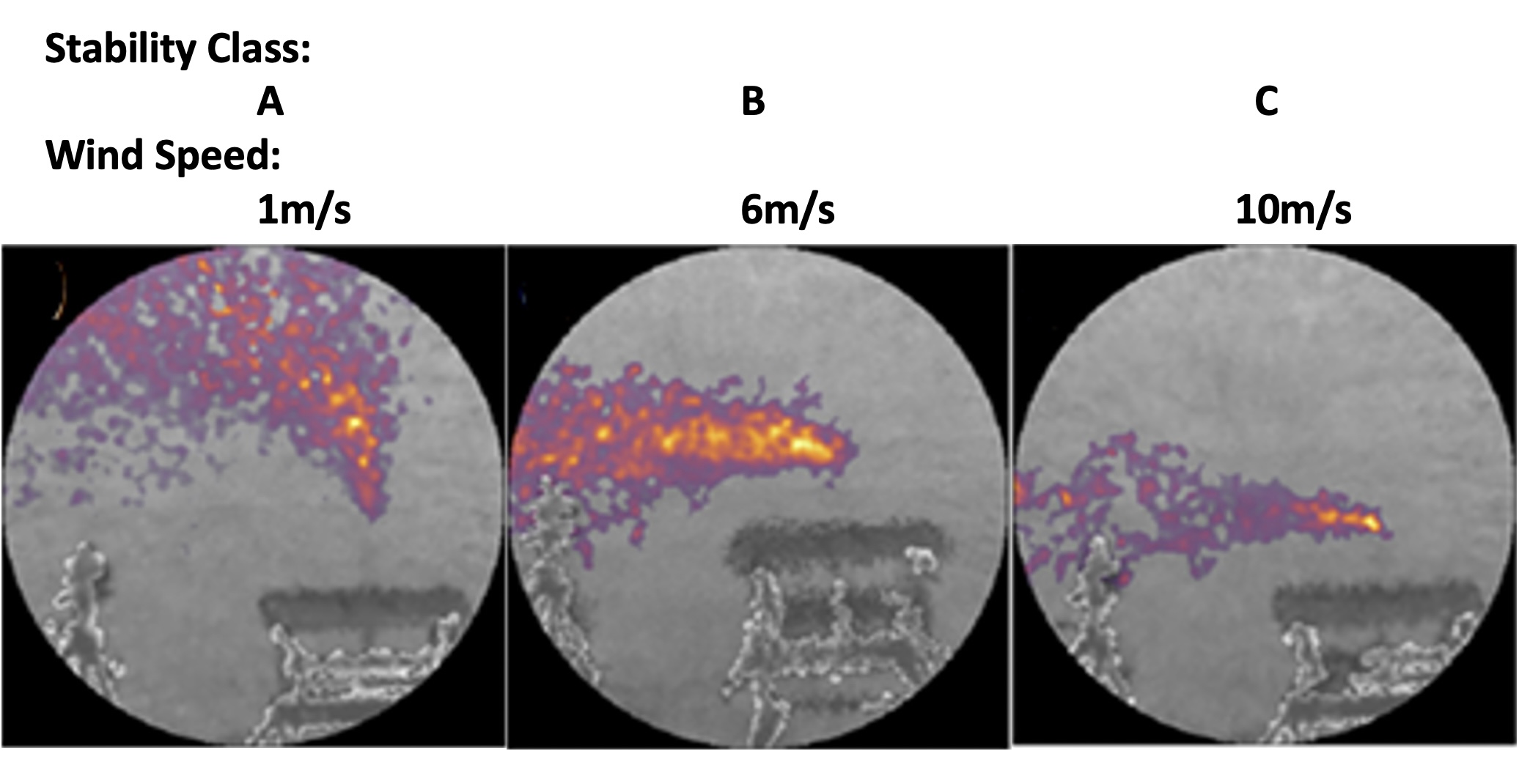
Today is another atmospheric physics edition of Plume of the Week! Atmospheric stability – described by the “Pasquill Stability Class,” has a dramatic affect on plume propagation. Below are three examples of methane plume images from the QLM gas imaging lidar camera. The plume at left is in relatively stable, daytime “A” stability class conditions, and the same plume is shown in progressively more unstable/windy “B” and “C” conditions (all the same 70L/min flow rate). In more stable conditions, the plume will travel greater distances before it dilutes and disappears. The advantage of QLM’s lidar, being able to see and measure the plume directly at its origin from great distances (>200m), means leak detection and quantification are less affected by stability class differences than, say, point sensors that measure gas concentration often far from the leak after the unstable atmosphere may have dispersed the plume.