How Atmospheric Stability Class Affects Plume Shapes
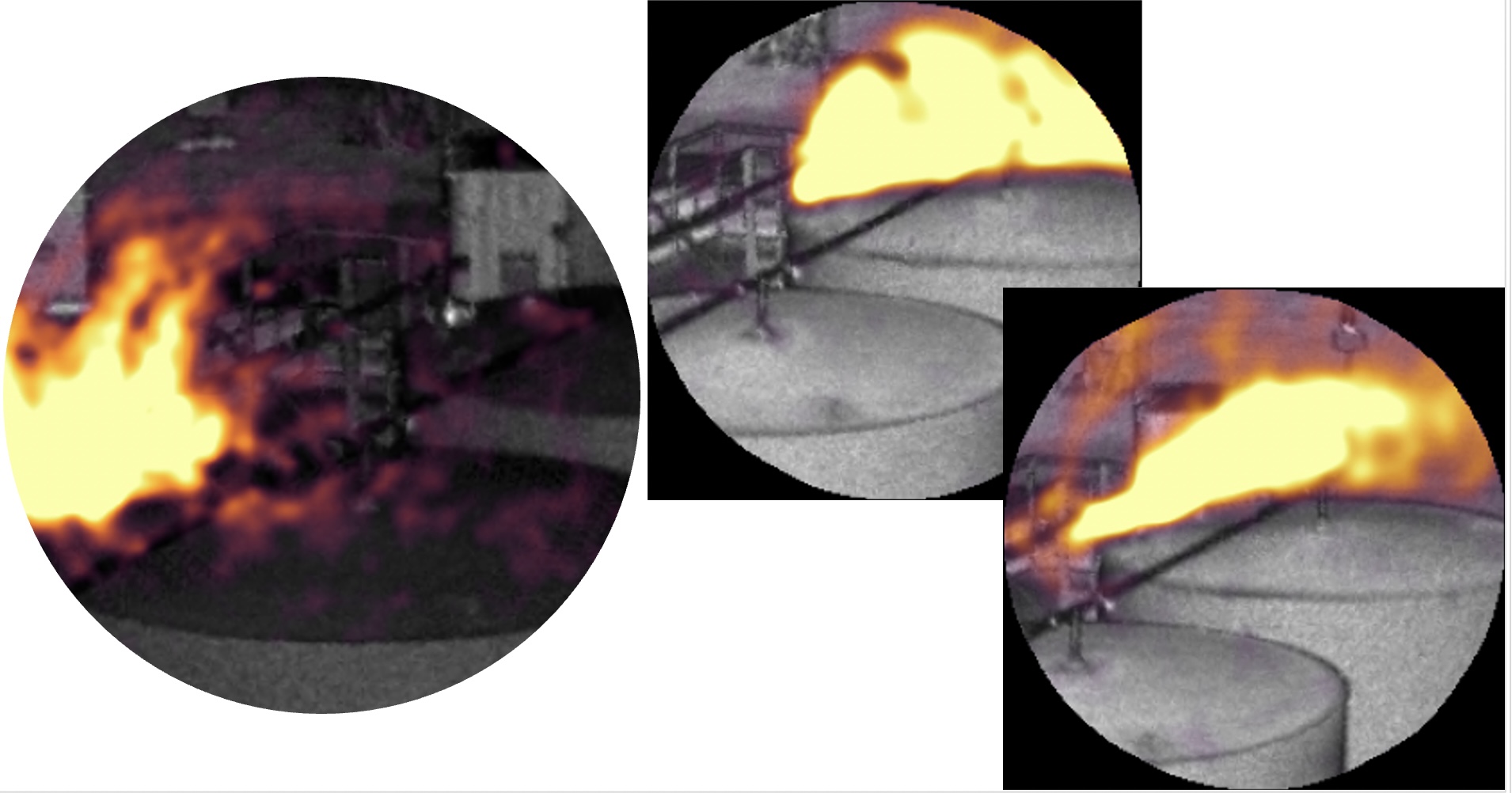
Depending on local atmospheric stability conditions, plumes propagate differently: common examples are plumes categorized as “fanning”, “coning” “looping” or “fumigation”. In these views of the same leak location, you can see very different plume behaviors depending on varying atmospheric stability. The plumes at right are quite different, even minutes apart with the topmost one showing almost no downward (vertical) dispersion. The plume at left is more dispersed due to atmospheric instability, characteristic of a windy, sunny day whereas you’ll more often see well-behaved plumes on clear nights with little or no wind.