Wastewater Treatment: Monitoring Biogas Facilities with Severn Trent
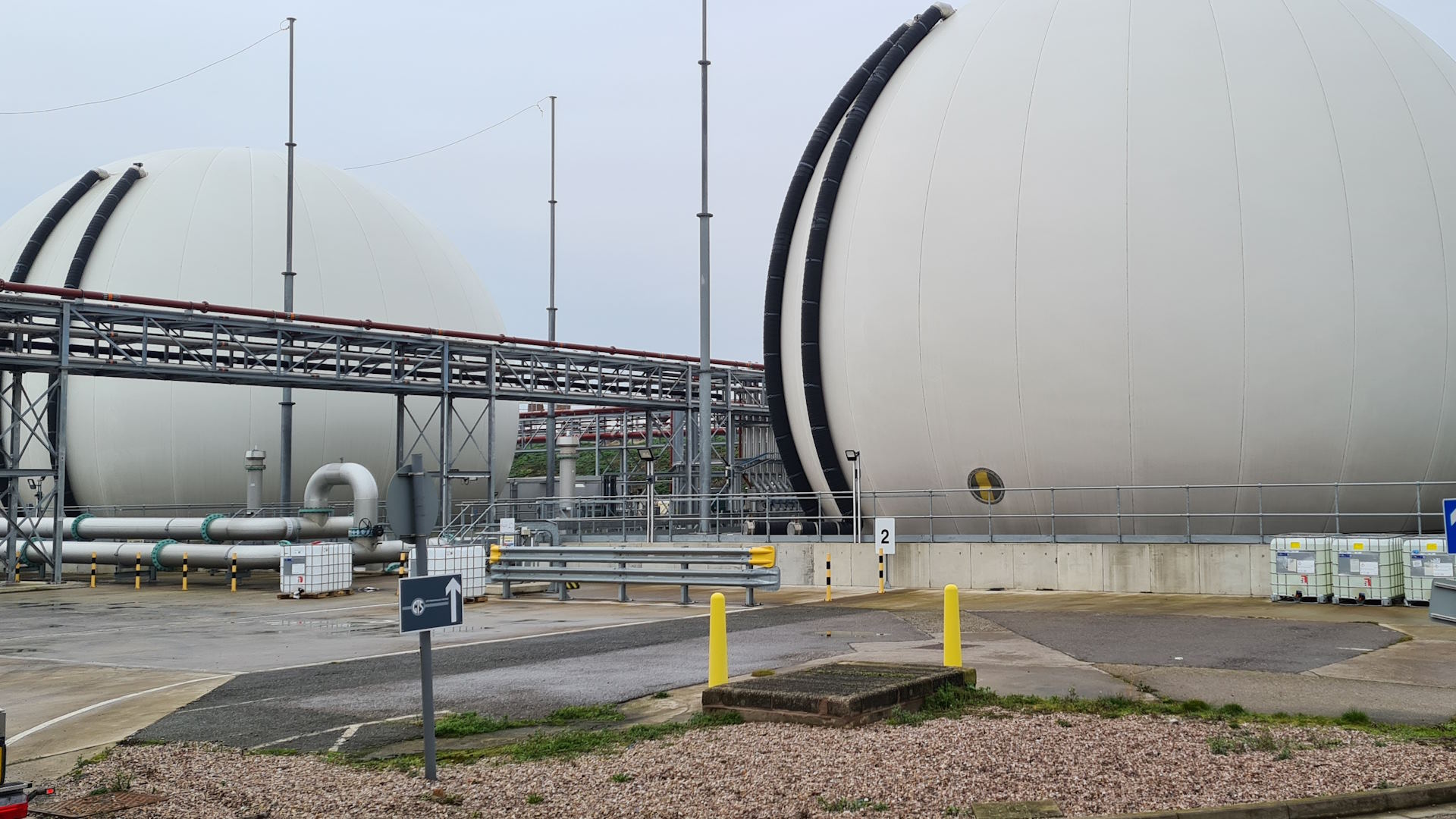
Severn Trent is one of the largest water companies in the UK, supplying over 4.5 million homes and businesses across central England and Wales, and operating 37 sewage treatment works across the region. The largest of these, at Minworth, treats sludge from a population equivalent of 2.3 million people, and is the site of Severn Trent’s largest renewable energy facility, with 8 MW heat and power capacity, and Biogas to Grid which produces 30% of their green energy. To demonstrate the effectiveness of CH₄ monitoring in biogas generation operations, in 2022 QLM collaborated with Severn Trent, trialling the Quantum Gas Lidar at Minworth’s sixteen-tank sludge digester array and gas-to-grid plant.
Deployment at Minworth Works
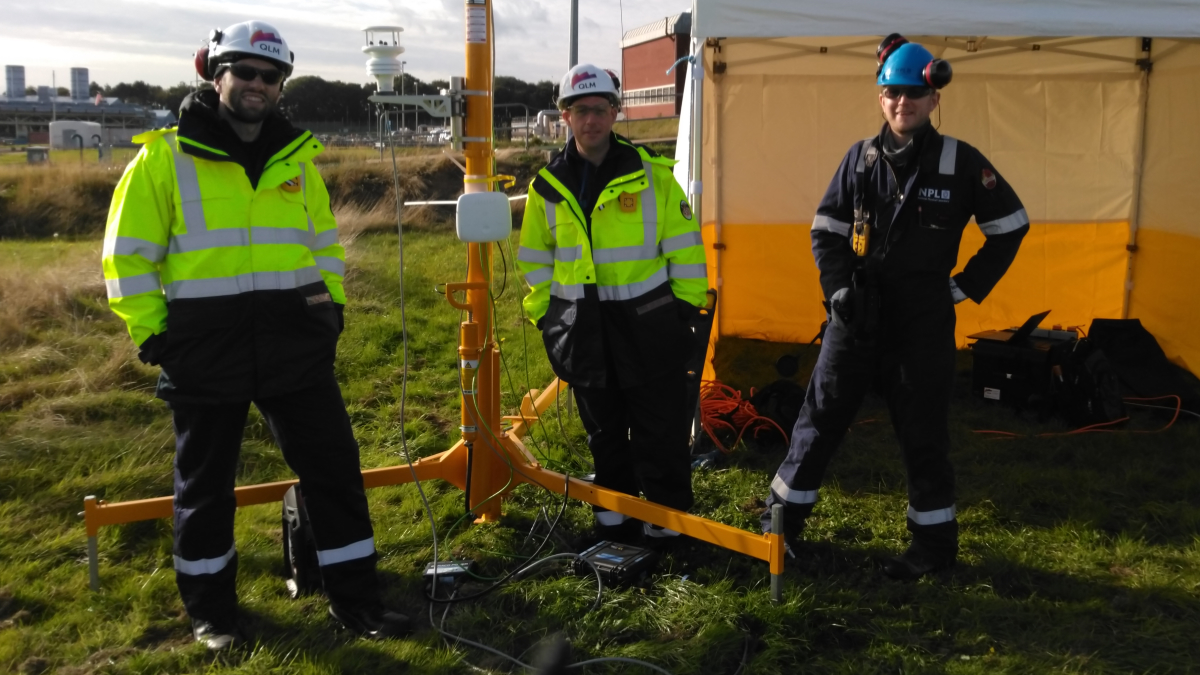
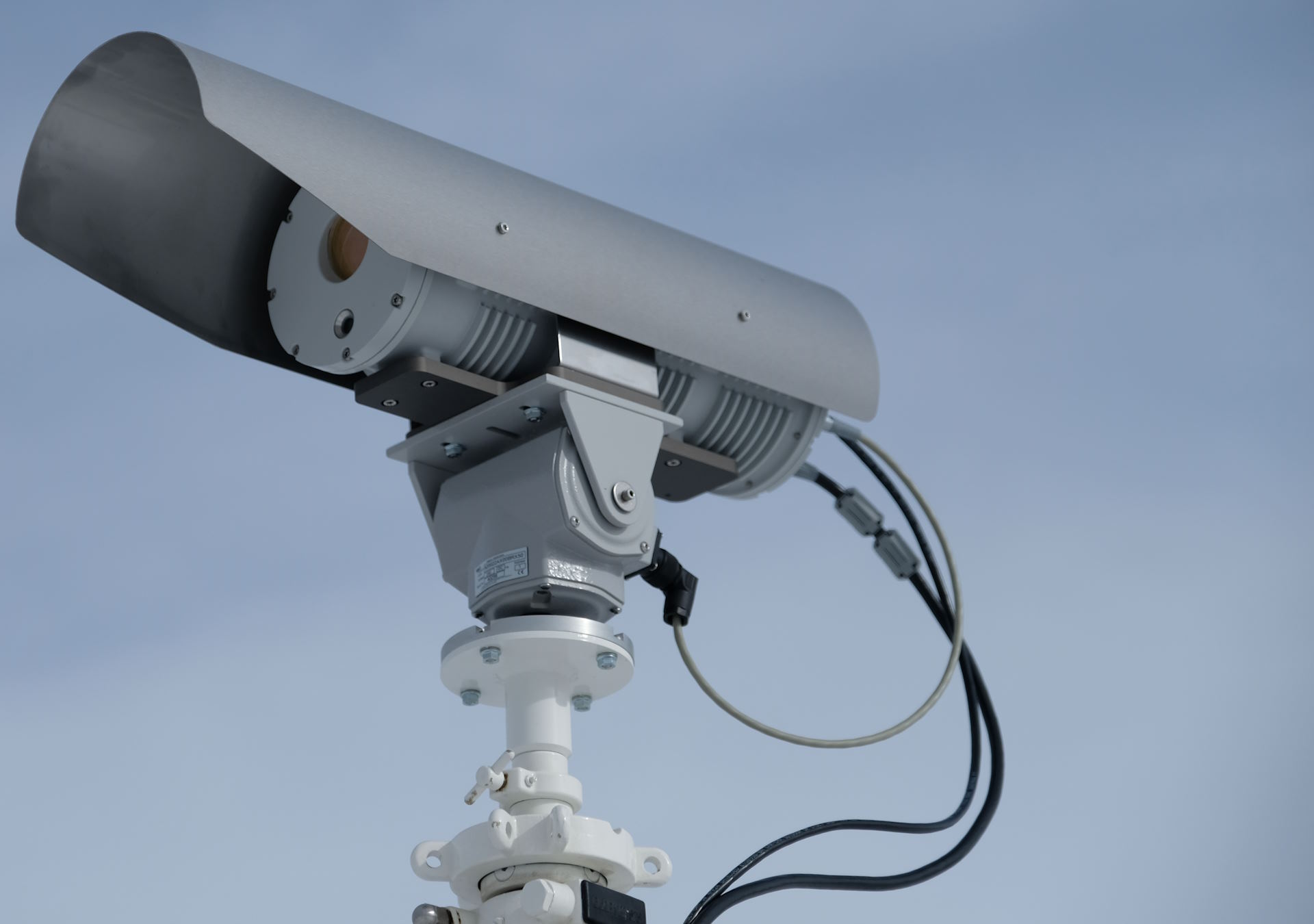
The Quantum Gas Lidar was deployed at two positions at the Minworth site, the first with the best view of the anaerobic digester array, and the second among the infrastructure of the gas to grid plant. The intention of the deployment was to detect any CH₄ emissions at the site and prioritise their repair, and to evaluate how effectively the QLM equipment could detect, pinpoint and quantify CH₄ emissions among the large and complex infrastructure. Positioning the lidar in these spots allowed for almost all of the potentially leaking infrastructure to be surveyed multiple times during the trial.
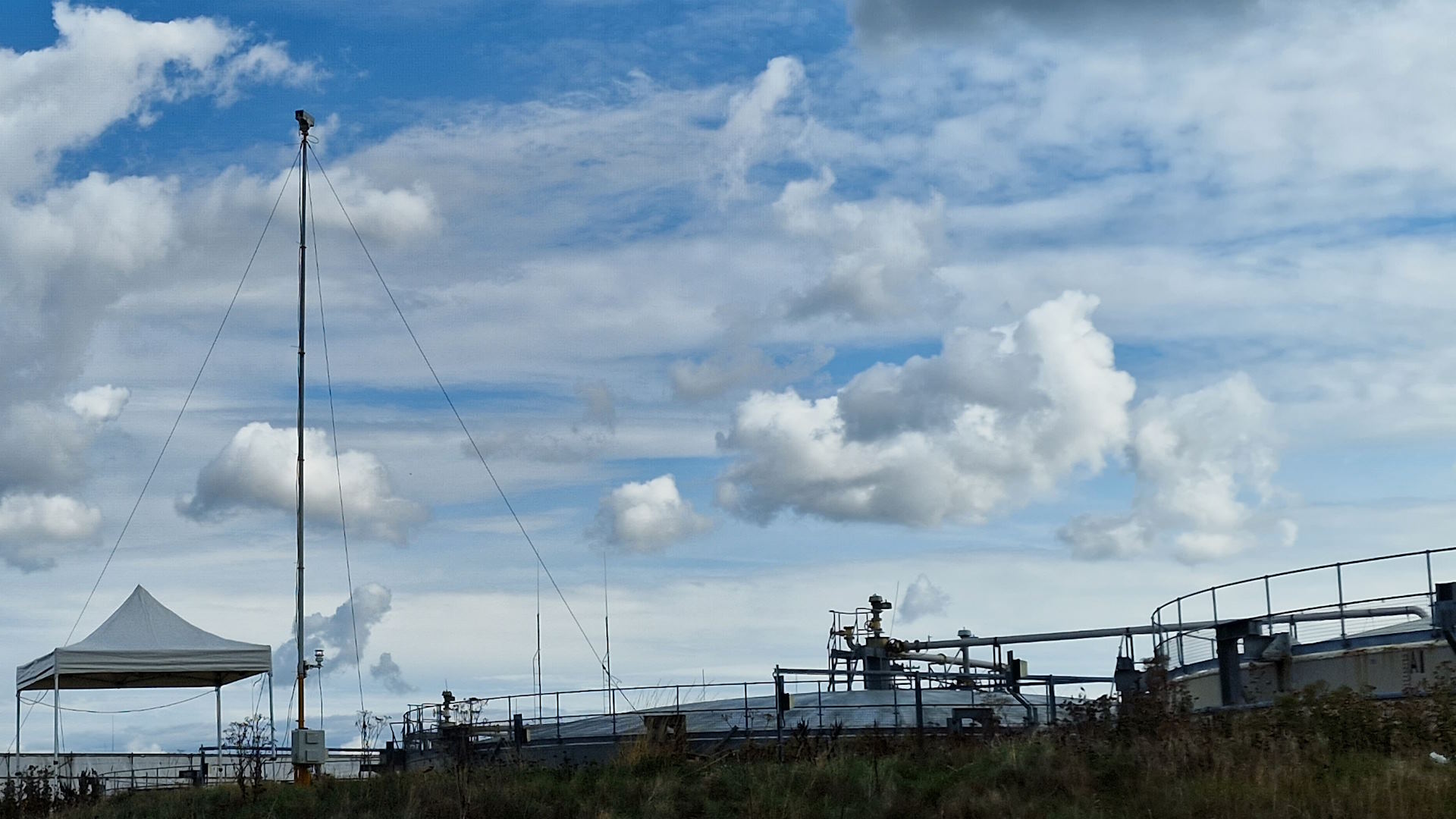
The QLM Quantum Gas Lidar deployed on a mast at 10 m elevation, looking down on the anaerobic digester array on the Minworth site
Fugitive Emissions From Anaerobic Digester Tanks
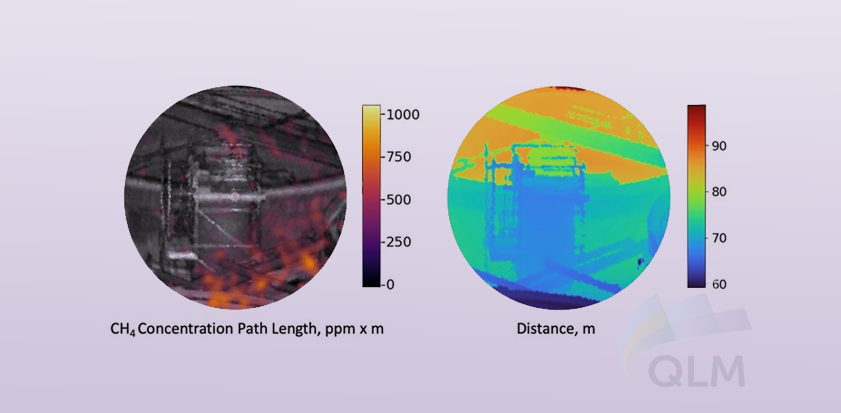
The walls of the digester tanks had riveted joints in the panels. While this presented thousands of possible leak sources, the vast majority of all of the rivets were shown to be leak tight. A very small number were shown to be leaking small amounts of CH₄ on a continuous basis. The highly accurate localisation of the lidar, even for leaks as small as these, can be used to direct the operator so they can prioritise repairs.
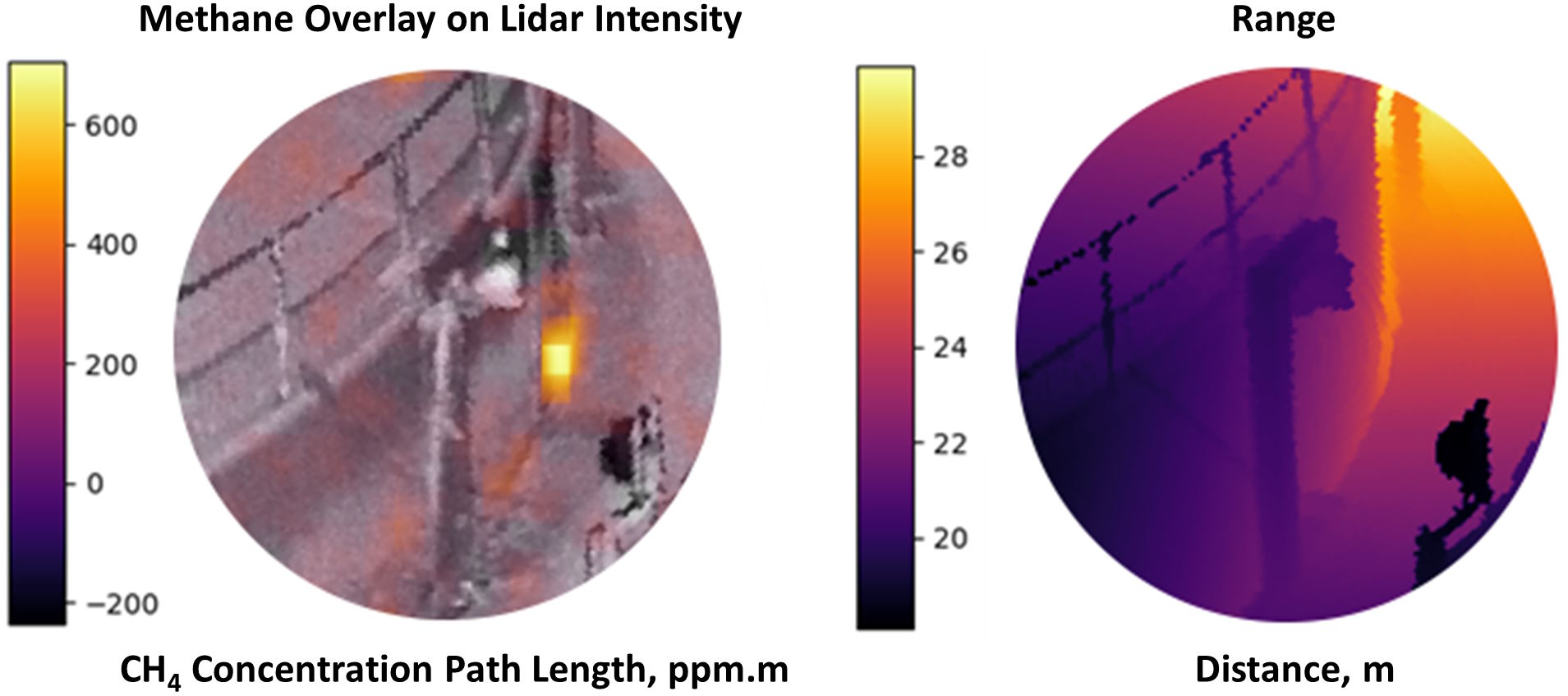
A small emission (15 L/min) from the wall of one of the digestion tanks
Fugitive Emissions From Pipework
Each of the digester tanks is served by a manifold of pipework that leaks to the decarbonisation plant. A very small number of small, persistent CH₄ leaks were observed in the pipework joints. The highly accurate localisation is again advantageous in directing the operator to the exact location of the emission to facilitate repairs.
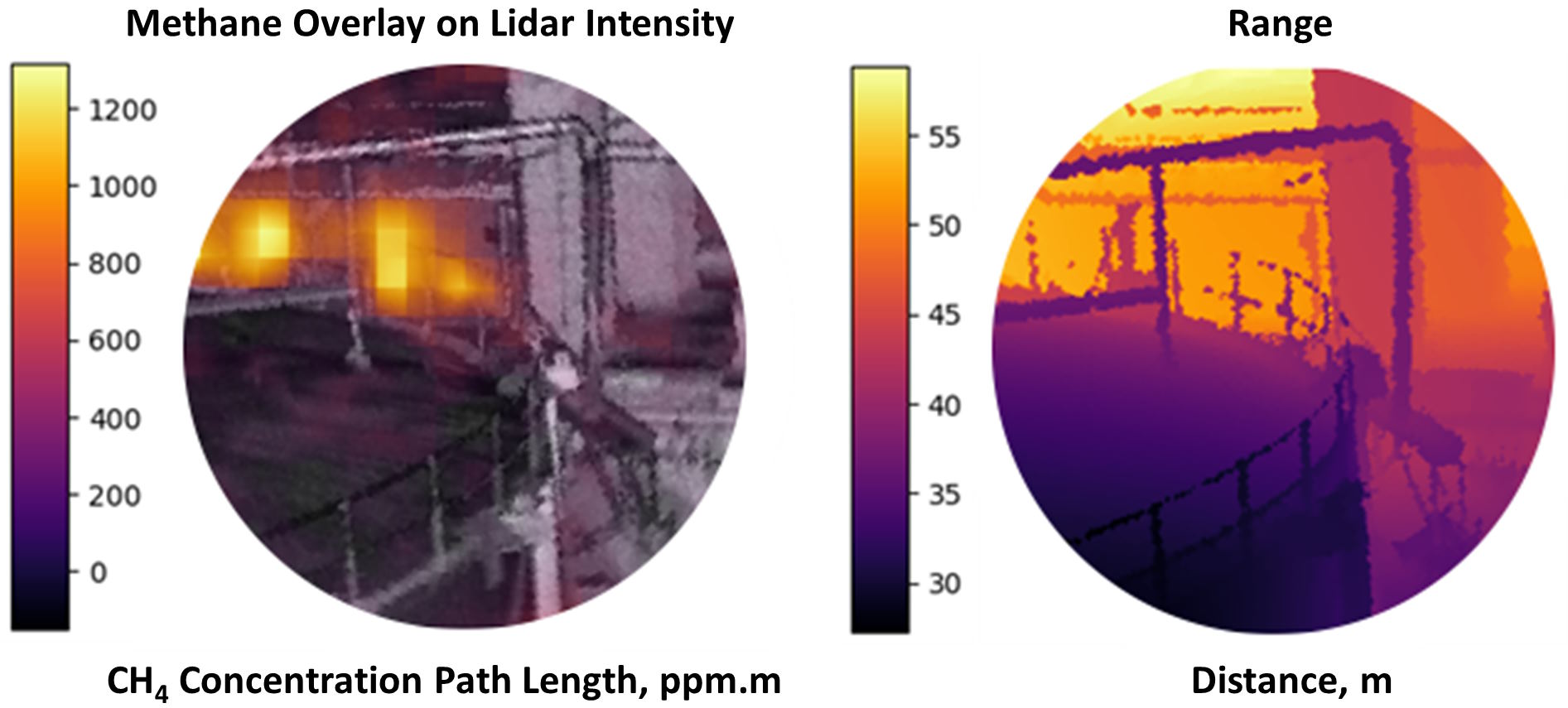
A small emission (57 L/min) from gas transfer pipework around the digestion tanks
Process Emissions from Decarbonisation Engines
The nascent biogas is refined to biomethane in decarbonisation plants, which remove the CO₂ and other contaminants before the product is compressed and fed into the grid. A persistent emission of CH₄ was observed from the chimney of the decarbonisation, indicating a degree of CH₄ seepage through the filtering system and into the exhaust. Some CH₄ seepage is expected from the process, and assessing the flow rate of the emission, and whether it changes over time, can help the operator to optimise the servicing of the engine and ensure maximum uptime with minimum emissions.
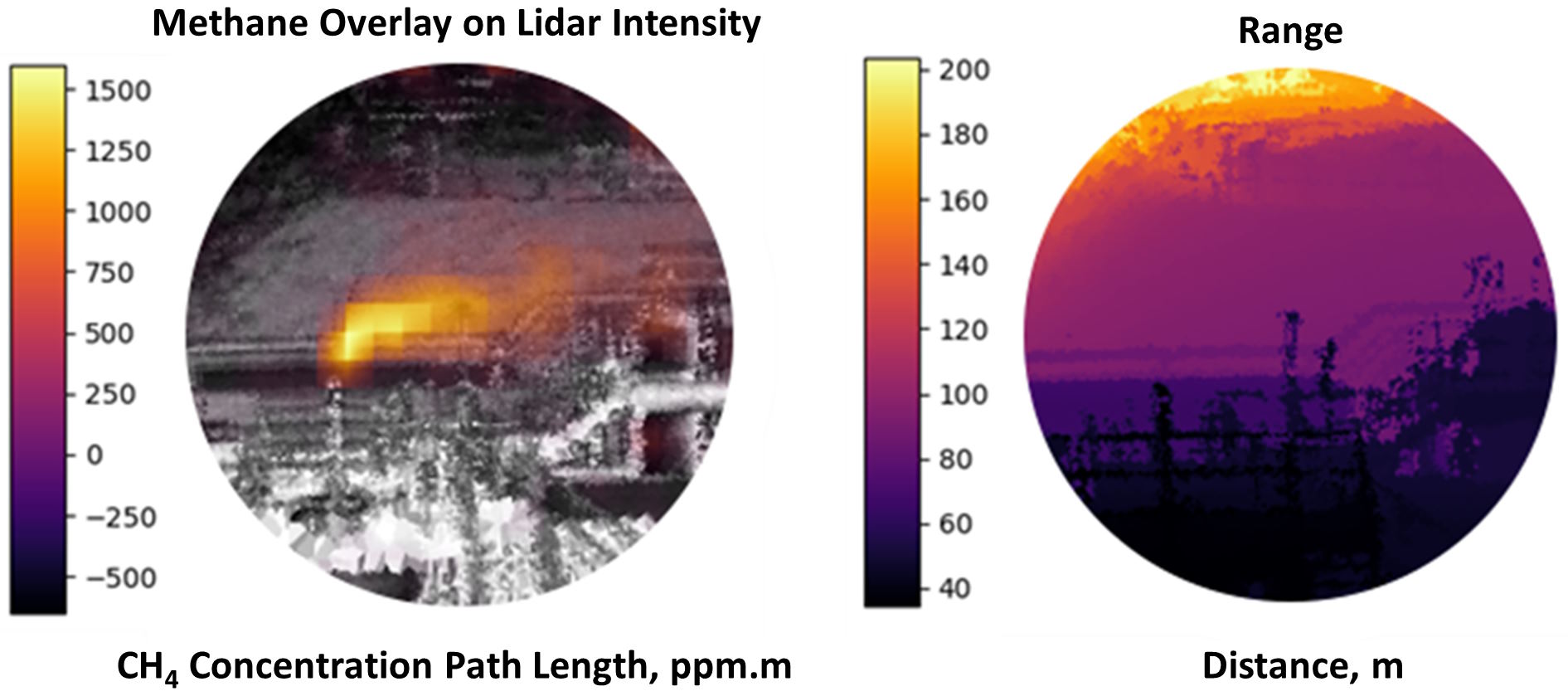
Process emissions (82 L/min) from the venting chimney of the decarbonisation engine
Conclusions
Over the course of the very successful trial, the QLM quantum gas lidar successfully identified and quantified previously unknown fugitive CH₄ emissions from the body and pipe infrastructure of the anaerobic digestion tanks at the Minworth site, as well as process emissions from the decarbonisation engines in the gas-to-grid plant. Severn Trent can use the data to remediate emissions in priority according to size, safety, or maintenance concerns. The trial also identified areas for development from automation and end-user flexibility points of view, which have since been incorporated into the commercial release of the lidar.