Oil & Gas: Emissions Monitoring & Quantification at National Gas Transmission
National Gas Transmission (NGT, formerly National Grid Gas) is responsible for maintaining the UK’s nearly 8000 km of natural gas (NG) pipeline, served by over 600 above ground stations. On the eve of COP26 in October 2021, QLM carried out the first trial of the quantum gas lidar at a real-world site at NGT’s Bacton Terminal, supported by the National Physical Laboratory (NPL).
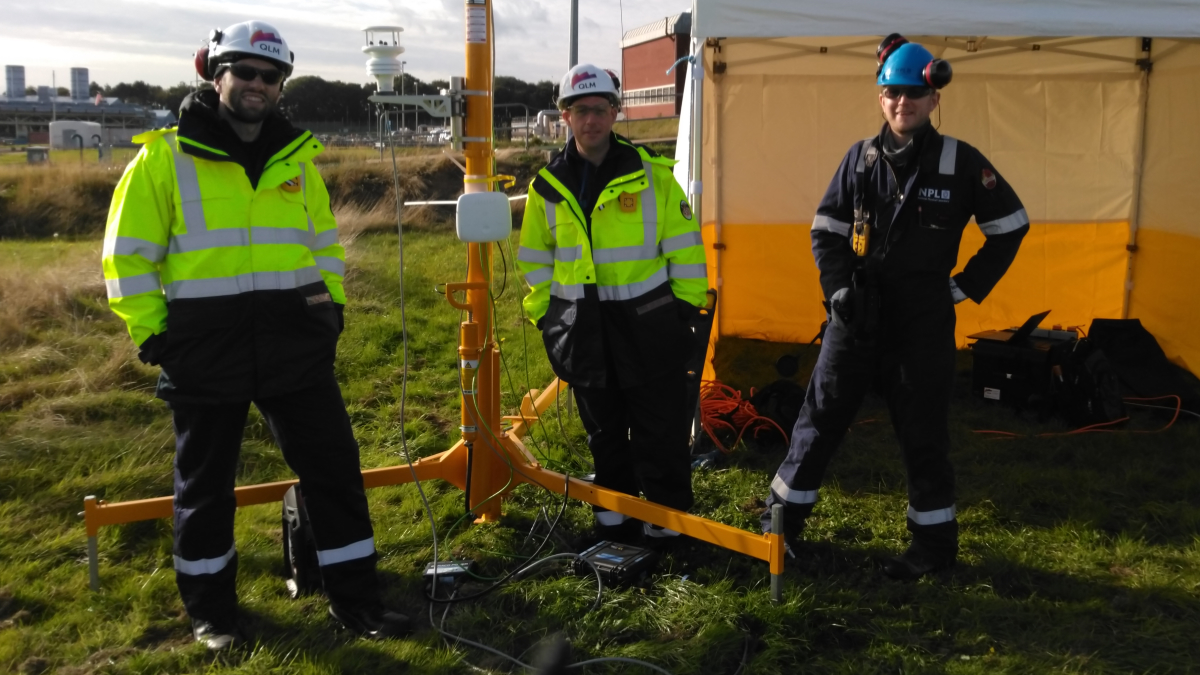
QLM Physicist Chris Goldsack (left) and Global Applications Lead Dr Doug Millington-Smith (centre), with NPL Senior Research Scientist Jon Hemore (right) at the Bacton site.
Deployment at Bacton Terminal
The trial of the lidar in a fixed emplacement at Bacton terminal focused on surveying for leaks and quantifying emissions on a portion of the site, while NPL carried out traditional walkover leak survey using industry standard methods of OGI and handheld “sniffers”. The comparison between QLM’s continuous monitoring and the traditional snapshot-in-time study were of particular interest to NGG’s decarbonisation plans.
Monitoring Emissions at Height
The QLM study focused on above-ground emissions, finding several substantial emissions a few metres off the ground through the venting pipes attached to the assets. These were visible to the OGI lidar that NPL used, but could not be effectively reached with the high-flow sampler to give an estimate of leak rate due to the height above ground.
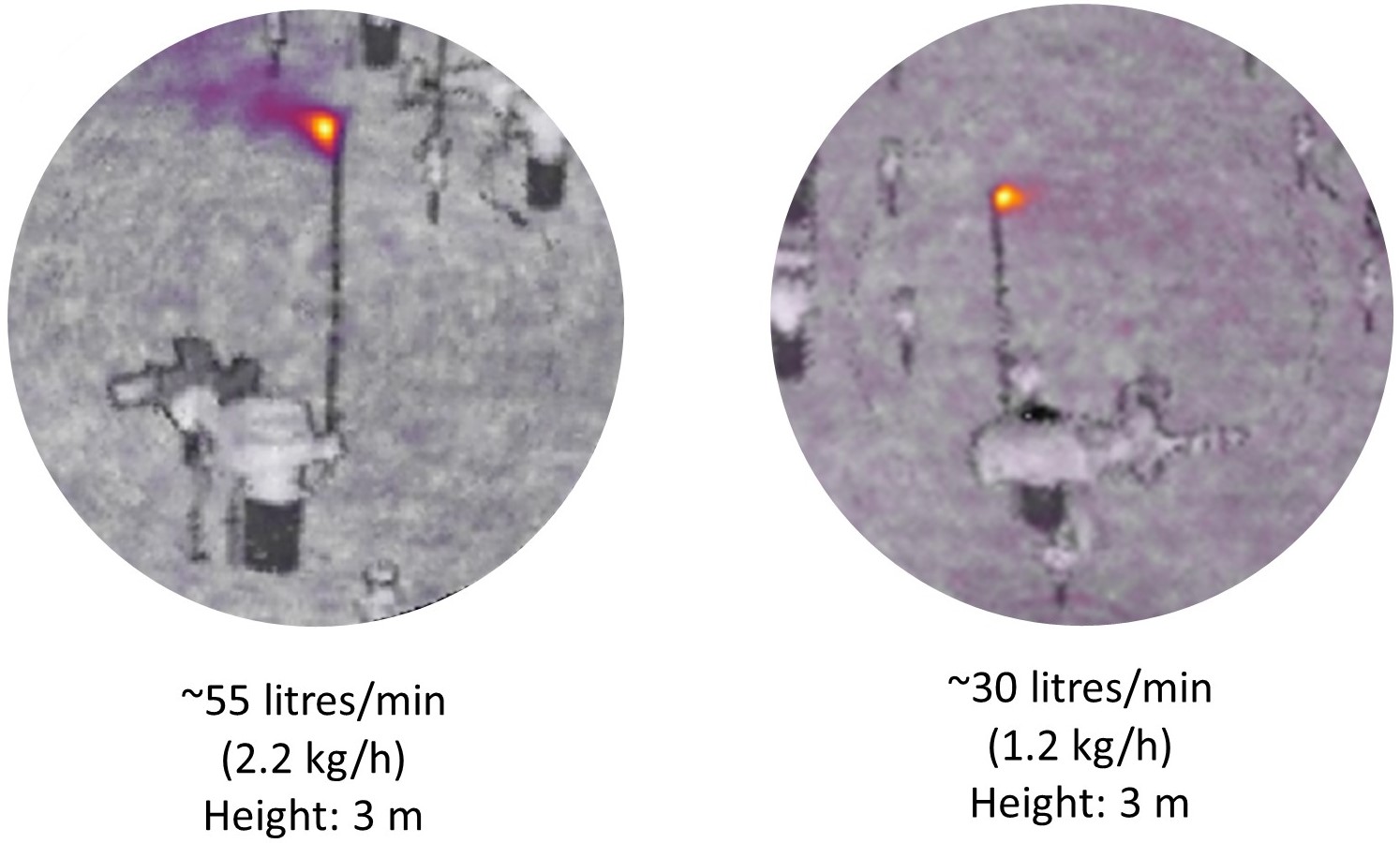
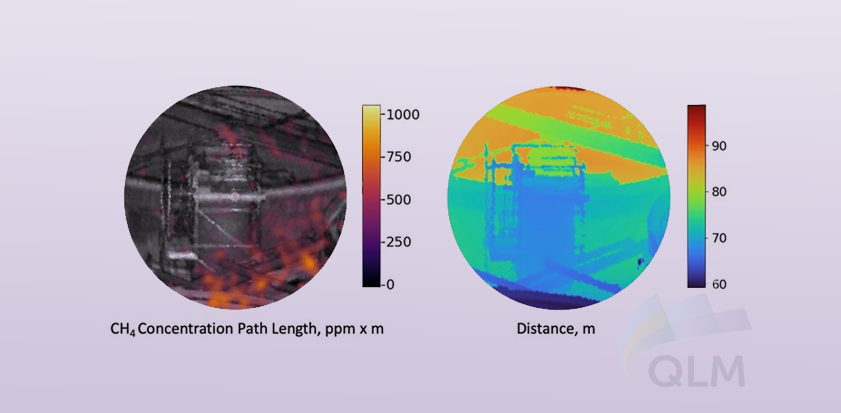
Two emissions at height, visible but unquantifiable by the ground-based crew.
Some of the emissions were persistent throughout the measurement period, and the QLM lidar was able to revisit these emissions several times over the course of the week and track any changes in their rate.
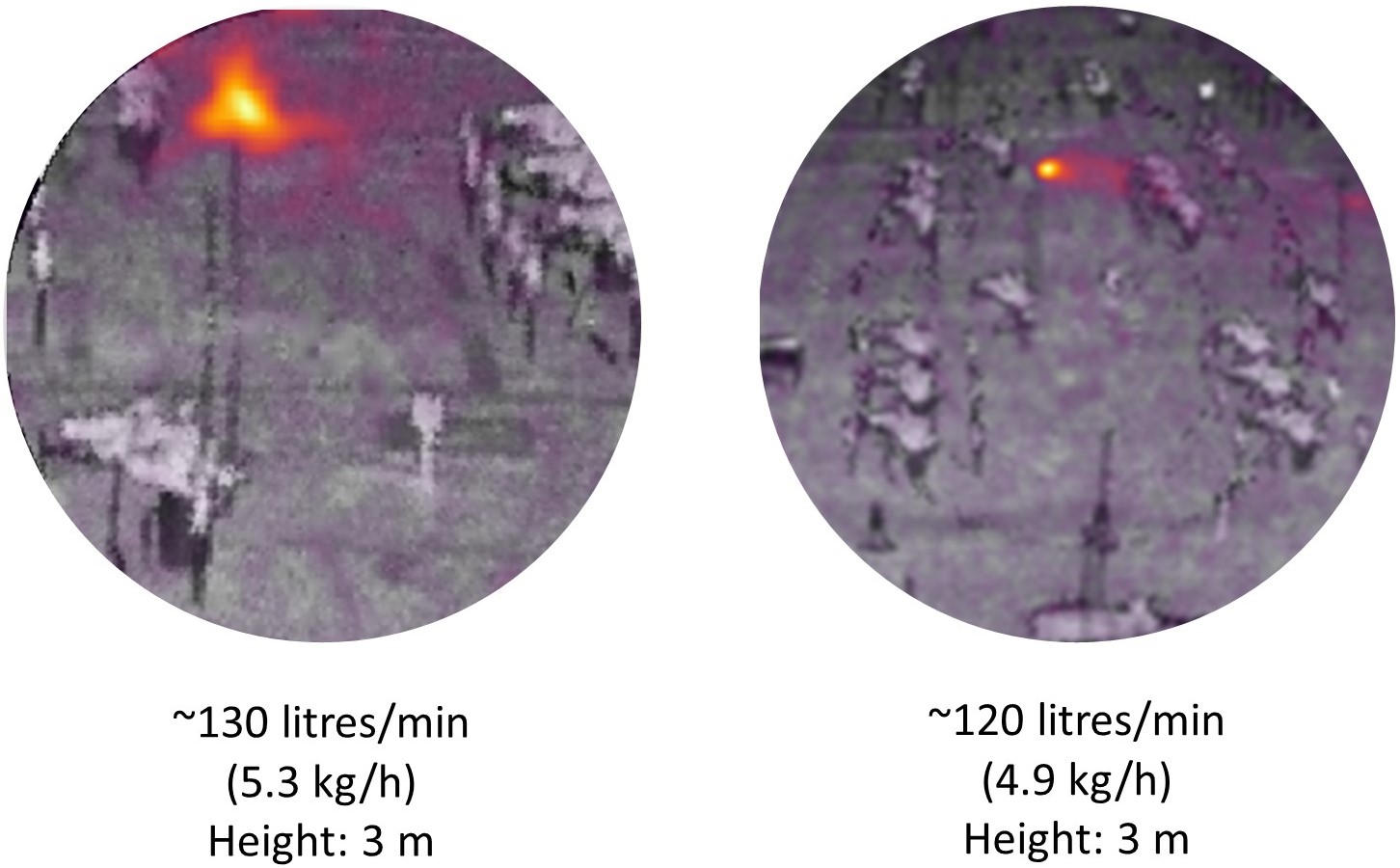
The same emission monitored at two different times, showing good consistency of emission rate
Monitoring Short-Term Venting Operations
Several deliberate venting operations took place during the week, as out-of-commission equipment was purged with nitrogen, or specific spots of pressure were relieved. These often took place outside of the target survey area, or in locations with an unfavourable background for the lidar. Nevertheless, it was possible to quantify extremely large calculated flow rates of gas associated with these short, highly temporally resolved events, which the walkover study would be unable to seek to detect.
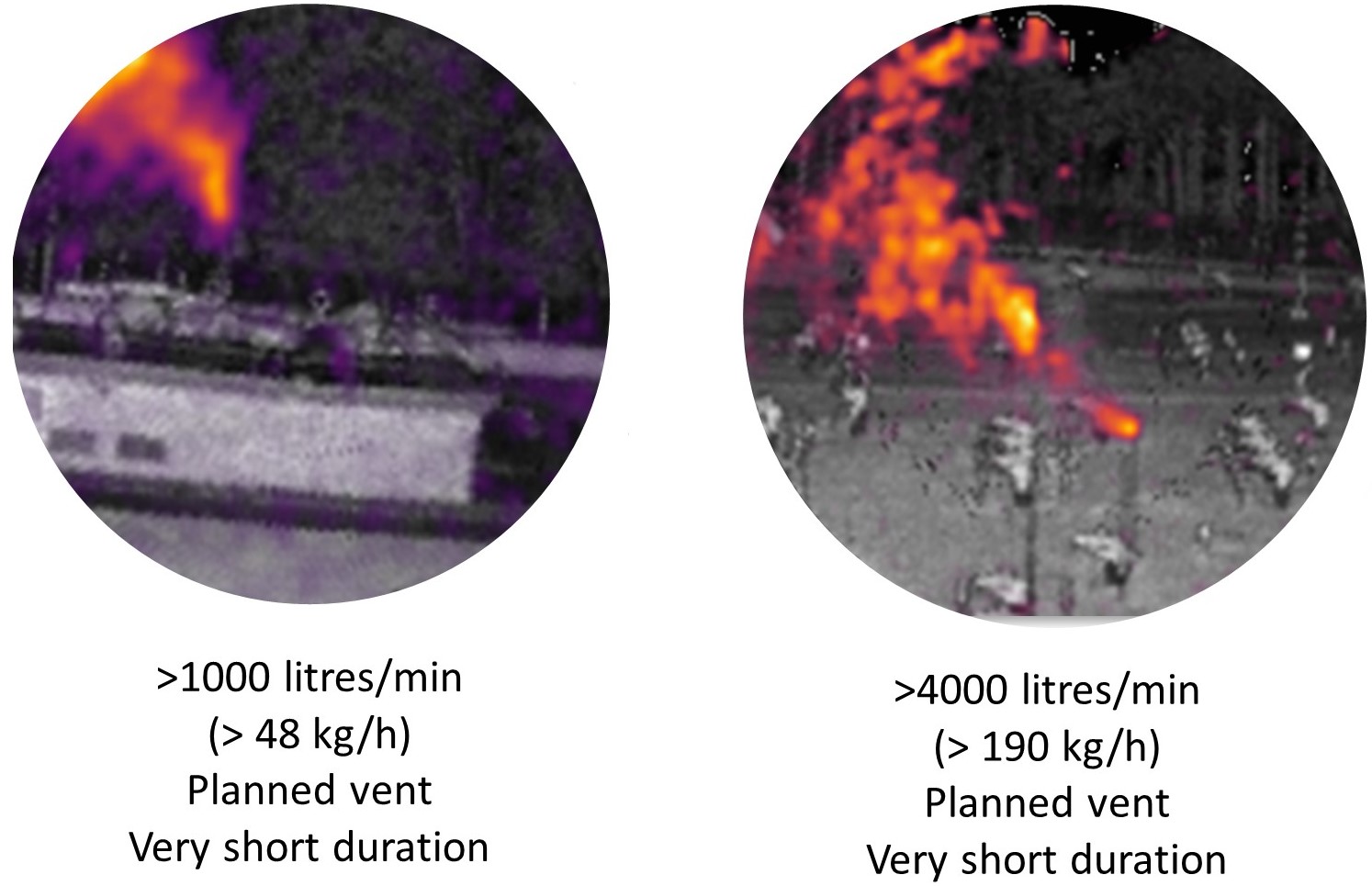
Two planned venting operations, each lasting for a very short time – the size and duration makes them unsuitable for traditional walkover methods
Simon Smith, Operations Representative at NTG, said “As an operational site we are always keen to review new technology and see how it can be implemented into a live environment and improve safety on site. As well as the environmental impact with fugitive emissions we can also see a use for the camera during maintenance activities. We isolate large areas of plant to allow for assets to be inspected. To facilitate this we need to vent quantities of gas and ensure the ball valves providing the isolation are not passing. By using the (QLM) lidar we have been able to identify valves that were passing that would have previously gone unnoticed. We would be able to use this technology to monitor open vents and ensure the leak rate does not increase during intrusive works.”
Conclusions
The trial was highly successful for QLM, identifying and quantifying emission sources from assets confirmed to be leaking by NPL, as well as characterising highly temporally-resolved venting operations across the site, which took place at heights and over short durations that a walkover survey would not be able to catch and quantify. The trial also identified areas for development from automation and end-user flexibility points of view, which have since been incorporated into the commercial release of the lidar.